

Prof. Jie Yang
Shanghai Jiao Tong University, China
Yang Jie graduated from Shanghai Jiao Tong University with a bachelor’s degree in Automatic Control. Three years later, he earned a master’s degree in Pattern Recognition and Intelligent Systems from the same university. In 1994, he received his Ph.D. in Computer Science from the University of Hamburg in Germany. He is currently a professor at Shanghai Jiao Tong University and the director of the Institute of Image Processing and Pattern Recognition. As a principal investigator, he has led and completed more than 30 national and ministerial-level research projects, with research areas covering image processing, pattern recognition, data mining, and artificial intelligence. He has published six monographs and over 500 papers in domestic and international academic journals and conferences. His work has been cited more than 30,968 times on Google Scholar, and his h-index stands at 90. To date, he has supervised five postdoctoral researchers, 46 doctoral students, and 70 master’s students. His research achievements have earned six awards, including the Ministry of Education Award and the Shanghai Municipal Science and Technology Progress Award, and he holds 48 authorized invention patents. The doctoral dissertations he supervised were awarded the title of “National Outstanding Doctoral Dissertation” three times, in 2009, 2017, and 2019. He has served as chair and keynote speaker at more than ten international conferences and was selected for the “Top 2% of Scientists by Career Impact in 2025” list jointly released by Stanford University and Elsevier.
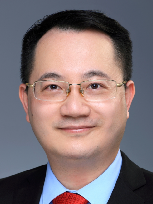
Prof. Xiaopeng Hong
Harbin Institute of Technology, China
Xiaopeng Hong is a Professor and PhD Supervisor at Harbin Institute of Technology (HIT) and a Senior Member of IEEE. He has been listed among Stanford University’s World’s Top 2% Scientists and was an invited speaker at Schloss Dagstuhl in Germany. He has authored over 100 articles in leading journals and international conferences, received two best paper awards from prestigious journals and conferences in the field, and led teams to win six championships in international evaluation challenges.He has been the principal investigator of over ten projects, including the National Key R&D Program Projects, National Natural Science Foundation projects of China, and an Infotech Oulu Postdoctoral funding project. His research has been reported by international media such as MIT Technology Review.He currently serves as a Standing Committee Member and Deputy Secretary-General of the CSIG Technical Committee on Affective Computing and Understanding, and as Deputy Director of the Academic Committee of the HeiLongJiang Computer Federation. He also serves on the editorial boards of major international journals such as Computer Vision and Image Understanding (CVIU), and has served as an Area Chair or Senior Program Committee Member for major international conferences including AAAI, ACM MM, IJCAI, and ICME. His current research interests include multimodal target perception, deep continual learning, and AI-generated content detection.
Speech Title: Trustworthy Continual AIGC Forgery Detection for the Open World

Prof. Chunbiao Li
Nanjing University of Information Science and Technology, China
Professor, Doctoral Supervisor in Nanjing University of Information Science and Technology. Recipient of the 4th Jiangsu Provincial “333 High-Level Talent” and backbone teacher of Jiangsu Provincial “Qinglan Project”; Distinguished Teacher and Outstanding Master’s Supervisor of NUIST. Senior Member of IEEE, Chief Science Communication Expert of NUIST. Presided over and participated in over ten research projects including General Programs of National Natural Science Foundation of China, Jiangsu Provincial Natural Science Foundation and China Special Postdoctoral Fund; published nearly 200 academic papers.
Speech Title: Chaos Regulation for Intelligent Computing and Security

Prof. Jiquan Ma
Heilongjiang University, China
PhD, Professor, and Doctoral Supervisor. He obtained his Doctoral degree in Computer Applied Technology from Harbin Institute of Technology, completed his post‑doctoral research in Bio‑information Technology at Harbin Medical University, and worked as a visiting scholar at the University of North Carolina at Chapel Hill (UNC). He is a member of the Biomedical Committee of the China Society for Image and Graphics (CSIG), Deputy Secretary‑General of the Heilongjiang Provincial Smart Medicine Special Committee, and former Vice‑Chair of CCF YOCSEF Harbin. He has presided over and participated in 2 National Natural Science Foundation projects and 3 Heilongjiang Provincial Natural Science Foundation projects. As the first author and corresponding author, he has published more than 60 high‑level academic papers in authoritative international journals and top‑tier international conferences. He serves as a reviewer for multiple top‑tier international journals and academic conferences. His main research interests include theories and methods of deep learning, intelligent analysis of medical images, and digital technologies for smart healthcare.
Speech Title: Research on Key Technologies of Diffusion Magnetic Resonance Image Enhancement Based on Deep Learning